


Technology trends in the security market to be adopted this year
Chief Technology Officer at Axis Communications, Johan Paulsson, explains in this article how IoT, high-speed networks, Big Data and deep learning will drive the demand for security solutions, both physical and online.

This year, technology will continue to evolve. High-speed networks, Big Data and deep learning have left the category of typical marketing jargon to become technologies capable of opening the door to new and better security solutions. De forma parecida, The Internet of Things will lose its novelty status and become much more integrated into our daily lives.
This will force connected device manufacturers to step up and take more responsibility in protecting their equipment. All of these factors, will likely, drive the demand for security solutions, both physical and online.
Security as a service
Just as has happened with many other technologies, customers will soon stop seeing physical security as merely a set of hardware and software solutions connected to a network and will begin to value it as a service, based on remote hosting and professional monitoring of video streamed from the customer's premises.
This shift in approach will take place with the involvement of industry specialists, que no solo se ocuparán de gestionar los complejos sistemas involucrados, sino que además ayudarán a reducir los costes necesarios para mantener los sistemas al día y protegidos. Thus, no solo se liberarán recursos internos que podrían destinarse a otras tareas, sino que también mejorarán el nivel de servicio del sistema de seguridad, la gestión de los dispositivos y los procesos de ciberseguridad.
Precisamente en el ámbito de la ciberseguridad, hemos observado un aumento en el uso de herramientas y prácticas diseñadas para reducir la vulnerabilidad del vídeo en red a los ataques.
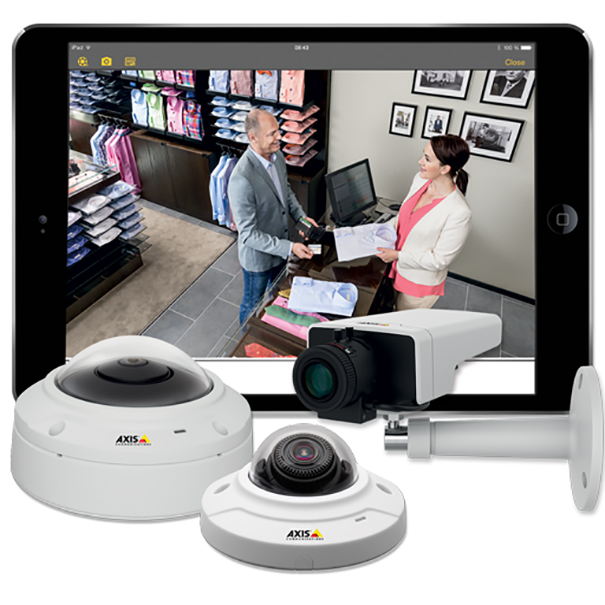
Soluciones integradas
El sector de la seguridad continuará avanzando por el camino de una oferta de soluciones específicas para problemas concretos, Instead of universal hardware/software solutions. Ultimately, customers are not simply looking for a camera or a video management system (VMS), but what they really need is to reduce theft, ensure that only certain people can access the counting room, or have potential threats controlled at an airport.
Although tech companies often overuse the word 'solutions', in this case, the term couldn't be more appropriate. The evolution of hardware and software, and also of the tools used before and after installation, towards comprehensive solutions will allow specific security problems to be addressed.
Estas soluciones constarán de cámaras de alto rendimiento y sistemas de almacenamiento y control de acceso estrechamente integrados con herramientas de analítica y gestión de vídeo. Este planteamiento facilitará a los clientes los procesos de compra, instalación e implementación y, a la vez, les ofrecerá una excelente rentabilidad de la inversión.

Nuevos horizontes de la analítica
En el marco de este proceso, aunque un vídeo de alta calidad es un elemento imprescindible de las cámaras de seguridad modernas, en última instancia es necesario evaluar y analizar esta información antes de poder tomar una decisión en respuesta a su contenido.
Los últimos avances tecnológicos en las cámaras, like thermal imaging and new features for using cameras in low light, have represented an important step forward. However, In the end, the result is a greater volume of video to analyze or review.
Just as new tools have been developed to organize the enormous volume of numerical and textual data obtained every day, the security sector has not spared efforts to develop video analytics software capable of helping professionals make better decisions in real time.
Very likely 2017 it will be the year in which these new camera features are finally integrated with real-time analytics to respond to different security problems, like facial recognition, forensic analysis or perimeter protection.

Deep learning
Given this growing volume of data, deep learning technologies are becoming increasingly prominent. These solutions use pattern recognition software to identify different types of behaviors observed through security cameras installed around the world.
Techniques based on deep learning and artificial intelligence are expected to play a leading role in the security sector. The reason is that, although every client is different, the environments and locations they usually move through generally fall into the same broad categories, so people tend to display similar behaviors.
Once these behaviors are learned, it is possible to share the patterns behind them, so the system is able to detect if something unexpected occurs. However, this is just the beginning and we have ahead of us a future full of extremely interesting possibilities.

Beyond the video
We are aware that physical security is not limited to the surveillance of people, places or objects, but also involves the control of physical access, unidirectional and bidirectional communication and emergency situation management, management that often must be carried out remotely.
For this reason, to take the concept of integration a little further, 2017 I, t, both locally and remotely. The result will be, therefore, h, in real time, a, s.

Cybersecurity
We remain convinced that living surrounded by millions of connected devices is an extraordinary future prospect, t 2016 o, video recorders and, unfortunately, b.
e, I.
t, the safety of their customers has always been a priority and we hope that from now on 2017 i. s, we will continue strengthening our product offerings and helping our customers protect their networks and devices.
t, h, e, video intercoms and smart, connected audio systems. In 2017, r, besides, e.
Johan Paulsson
Chief Technology Officer at Axis Communications

¿Te gustó este artículo?
Subscribe to our NEWSLETTER and you won't miss anything.