


Genetec reveals how IT and physical security departments tend to understand each other
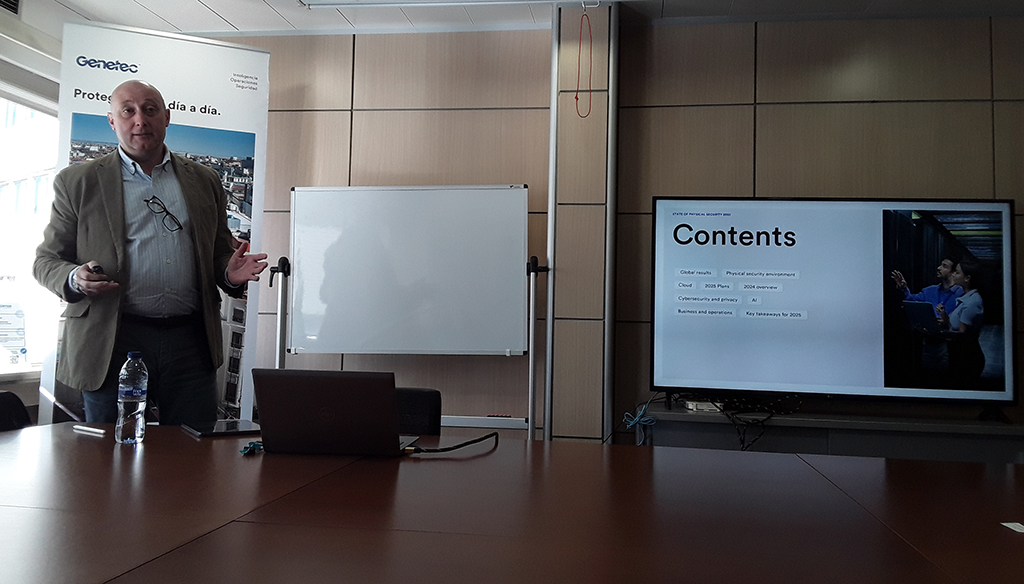
Rafael Martin, sales director for Southern Europe Genetec, has released the conclusions of the latest 'Report on the state of electronic security’ that the company has developed. In this, Hybrid cloud adoption accelerates, the influence of artificial intelligence and the growing influence of IT.
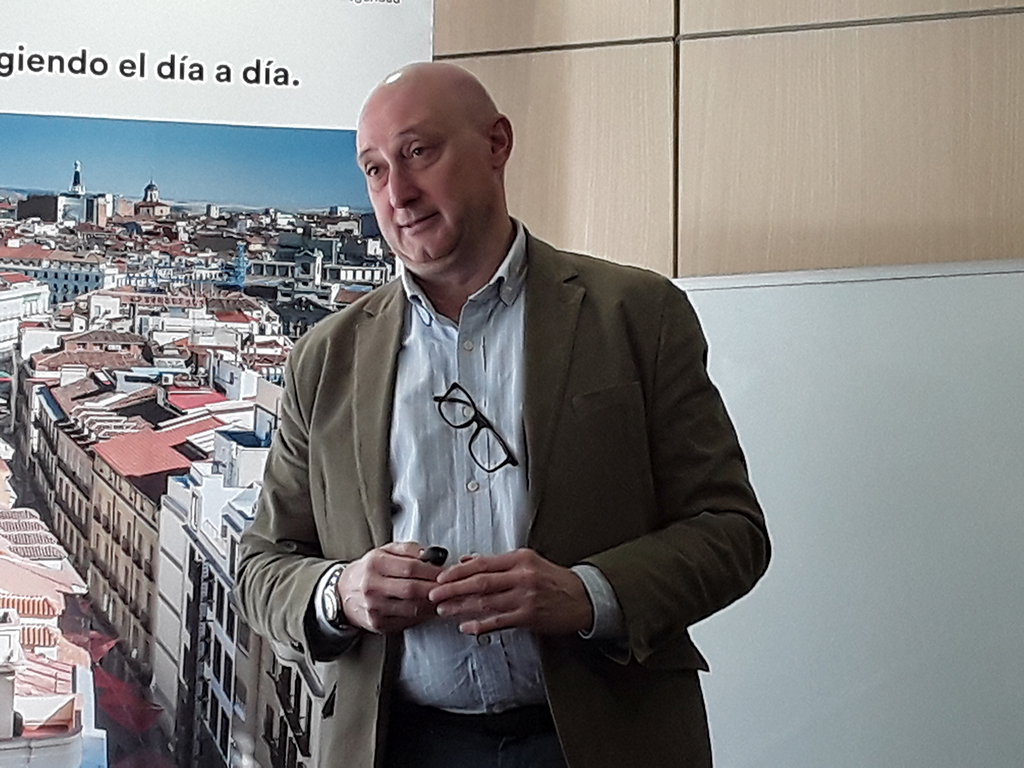 The latest study presented by Genetec highlights how physical security, increasingly, is part of the business. How do you explain Rafael Martin, sales director for Southern Europe, “The line between IT and security is now almost transparent. “They speak the same language and there has to be an understanding between security and the rest of the business”.
This is one of the conclusions that highlight the 'Report on the state of electronic security 2025' which the company has just announced.
This study is based on the opinions of more than 5.600 industry members from around the world (including end users, channel partners, systems integrators and consultants), and offers a comprehensive analysis of evolving trends in business operations. electronic security.
a decade ago, Electronic security systems in large organizations were often managed by personnel from specialized security departments. However, the growing adoption of cloud and desktop solutions hybrid cloud, The increase in cybersecurity threats and the need to align electronic and digital security have led IT teams to take an increasingly prominent role in influencing the acquisition and implementation of electronic security systems.
According to the report, he 77% of end users say that electronic security and security departments information technologies (OF) they now work collaboratively. Besides, IT areas are assuming an increasingly important role in the purchasing process, since more than 50% of end users, systems integrators and consultants affirm that IT teams are actively involved in electronic security purchasing decisions.
Rafael Martín also highlights that in recent years there has been a decrease in the investment made by companies and he describes as one of the main causes the lack of talent. “Finding talent, personal, It is difficult and this delays investments and the development of projects. It is something that is reflected in all geographical areas”.
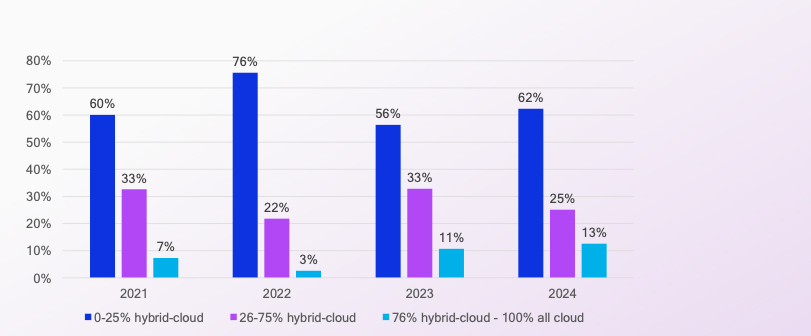
The trend towards hybrid cloud
Besides, One of the fastest growing trends in the security environment is the adoption of the cloud as organizations seek flexibility and control.
As organizations evaluate cloud solutions for electronic security, most give priority to a hybrid strategy that fits your operational needs, budget constraints and storage requirements. This pragmatic and flexible deployment approach enables critical data and applications to be managed both on-premises and in the cloud..
According to the report, he 43% of end users consider hybrid deployments to be their preferred approach in the next five years, in front of only the 18% that prefers fully cloud-based deployments and 17% that plans to remain entirely in its facilities (on premise). This preference for hybrid cloud is shared by consultants and channel partners, since he 66% of consultants plan to recommend hybrid implementations in the next five years.
“With a hybrid cloud approach there is no ‘all or nothing’. Companies continue to have full control of how they deploy their systems in different locations. With an open ecosystem, can implement the best technology - whether on premise o cloud- that meets your business needs and avoid unnecessary commitments, without getting trapped in proprietary solutions. This allows them to deploy, scale and update systems faster, streamline processes and reinforce your security posture in the most efficient and effective way”, states Christian Morin, Vice President of Product Engineering at Genetec.
In Europe, Mature markets are prioritizing upgrading old systems as their main objective to 2025, something that is globally positioned as their fourth preference.
“In you, cloud has been around for years, However, in the field of security it is something more recent, understanding it as a platform and not as a service. Its adoption will be an evolutionary process and what we are going to see in the short term will be the hybrid cloud. Small companies will adopt before large ones and it will also depend on the geographical areas.. In Northern Europe it will be faster than in the South, where I think there are still two or three years left for it to be a complete reality”, Rafael Martín highlights.
He 55% of end users in Europe indicate that they will not store video in the cloud in 2025, a percentage significantly higher than the global average of the 33%. This data reflects a more cautious approach to the cloud compared to other regions.
Southern Europe (Portugal, Spain, Italia, Greece, Albania, Malta and Cyprus) also presents specific challenges.
He 45% of end users report that their budgets remained stuck in 2024, in front of 25% of the European average. Besides, Costs are the most common reason for slow cloud adoption. He 58% of end users chose it, in front of 35% global. Southern European users also selected cybersecurity risks more frequently than any other subregion to delay cloud adoption. In southern Europe, This was the second most commonly selected reason, chosen by him 35% of end users versus 24% throughout Europe (reason no. 6).
AI adoption grows
The report reveals a significant increase in interest towards the adoption of artificial intelligence in electronic security, with a 37% of end users who plan to implement features driven by artificial intelligence in 2025, in front of only the 10% in 2024.
Southern Europe is the least likely region to integrate AI into electronic security systems, with a 57% who claims to have no plans to integrate it, probably due to concerns about it being used maliciously (and 53% considers it this way compared to a global average of 38%).
This greater general interest is aligned with a strategic and goal-oriented approach. With a 42% of end users who see this technology as a tool to streamline security operations, Organizations are focusing on practical applications such as improving threat detection and automating routine processes. The ultimate goal is intelligent automation.
traditional security, focused on video, access control and intrusion, has evolved, has incorporated new elements to integrate into the business, in the operation.
¿Te gustó este artículo?
Subscribe to our NEWSLETTER and you won't miss anything.