

Hikvision analyzes the trends that will mark the security industry in the short term
Technologies such as artificial intelligence and IoT, with more and more applications; open and sustainable ecosystems, cybersecurity and more are some of the forecasts that Hikvision believes they will be key this year.
The physical security industry has changed rapidly in recent years. The developments and applications of cutting-edge technologies, such as artificial intelligence and IoT, they don't stop breaking borders, while security systems are integrated and expanded with new tasks and functions for more efficient operations in more sectors and different types of organizations.
With these market observations, the security manufacturer Hikvision advances seven key trends that will come to the fore in this sector as the year progresses 2023.
- AI applications are diversifying, which requires more open ecosystems
With more diversified AI products and applications, that help solve highly complex problems on a daily basis and meet fragmented customer needs, The industry is also exploring the acoustic and textual capabilities of this technology., mainly in the visual environment.
For example, AI acoustic anomaly detection is being used to detect equipment failures in industrial environments to increase worker safety. Besides, This technology is evolving until the self-learning phase, with much faster training and optimization than supervised learning.
All this requires more ecosystems with technologies, open resources and even open protocols, driving industry collaborations. Open technologies, such as containers and virtualization, have significant potential in the security environment that are making hardware products more compatible.
- AIoT continues to build bridges between the physical and digital worlds
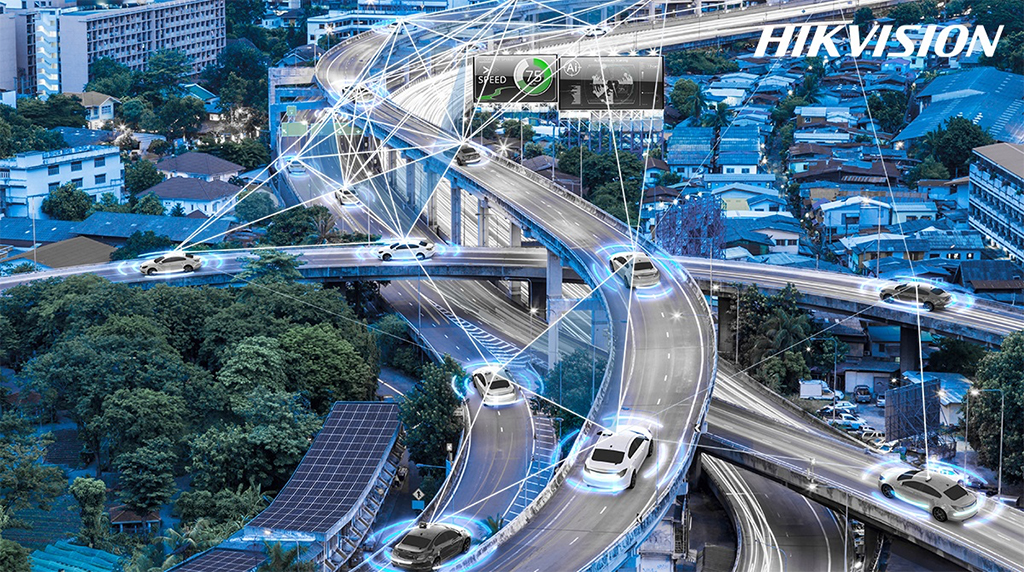
Taking artificial intelligence further, the combination of this technology and IoT (AIoT) will continue to be an important trend during this year, reshaping the scope of the security industry, with the introduction of AIoT solutions that will not only provide intelligent protections, but will also help advance the efficiency of operations in a multitude of environments and organizations..
AIoT will create an important path to drive digital transformation in various industries, by creating a digital twin, bridging the physical and digital worlds. For example, In the management of industrial estates, virtual sites can be created by applying 3D modeling, thanks to the use of virtual reality and augmented reality technologies, to represent and reflect real scenarios, giving them the dynamic vision needed to act quickly and keep the entire site running smoothly.
- Visual experience improves with imaging technologies 24/7
Capture security images with clarity and color 24 hours of the day is one of the main demands of video security users, but the poor night light has always been the biggest challenge to achieve it. Now, with the development of several new imaging technologies, These challenges are being eliminated.
Bi-spectral image fusion technology, that uses two sensors, Used to combine visible and infrared light images and reproduce vivid colors in low light conditions. Image signal processing, based on artificial intelligence (AI-ISP), leverage deep learning algorithms (deep learning) to improve visual noise reduction and optimize night images.
- Perceptual abilities extend to a wider range
For security applications, perception capabilities go far beyond visible light, stretching across the electromagnetic spectrum to expand abilities to perceive the physical world in new ways. For example, Hyperspectral imaging technology has been used in the analysis of optical irradiation and eutrophication characteristics to record water quality trends in rivers and lakes..
In the millimeter wave band, Radars help measure the speed and distance of vehicles. The X-ray band has been widely applied in security inspections, as in detection of defects in industrial equipment.
These multidimensional perception capabilities also converge to create innovative solutions to perform a multitude of new operations., as radar-assisted video systems for perimeter protection, video array and antenna integration solutions for traffic management, etc.
- More ease of use of devices and systems
The usability of devices and systems impacts the daily lives of security professionals, which has generated greater attention, due to labor shortages and rising labor costs in the sector. A trend that is requiring manufacturers to optimize their products with a simpler configuration process, that reduces installation time and reduces maintenance costs.
For example, More and more installers prefer to use mobile applications instead of PCs for the installation and maintenance of equipment, where this interactive and simplified process is best perceived.
- More sustainable operations
Trends in green manufacturing and low-carbon initiatives in the security sector are very inspiring, with longer lasting products, recyclable materials and packaging and use of renewable energy.
Each of these initiatives reduces waste and emissions. For example, Demand for solar powered cameras continues to increase due to their proven effectiveness. In manufacturing and daily operations, More and more companies in the sector have set medium and long-term objectives in terms of environmental management, ranging from lower carbon production, the efficient use of energy and the management of waste and chemicals, to greener office environments.
- Zero trust in cybersecurity strategy
A very important and challenging issue for all areas of the sector is cybersecurity., as customers and regulators are increasingly concerned about protecting their data and privacy, for which they have established stricter standards and requirements in this regard.
The concept of zero trust is increasingly present when developing cybersecurity strategies. Zero Trust is an initiative that was developed to prevent data breaches by removing the concept of trust from an organization's network architecture..
In cybersecurity, trust becomes a vulnerability, and Zero Trust is an approach that dictates that the maxim of our connected systems is 'never trust; always check'.
¿Te gustó este artículo?
Subscribe to our NEWSLETTER and you won't miss anything.