


Dallmeier integrates VCA technology into its series cameras 5000
Video Content Analysis technology allows the detection and classification of all potentially relevant events. The metadata is stored in a database in the recording system, the storage space required for non-relevant events being negligible.
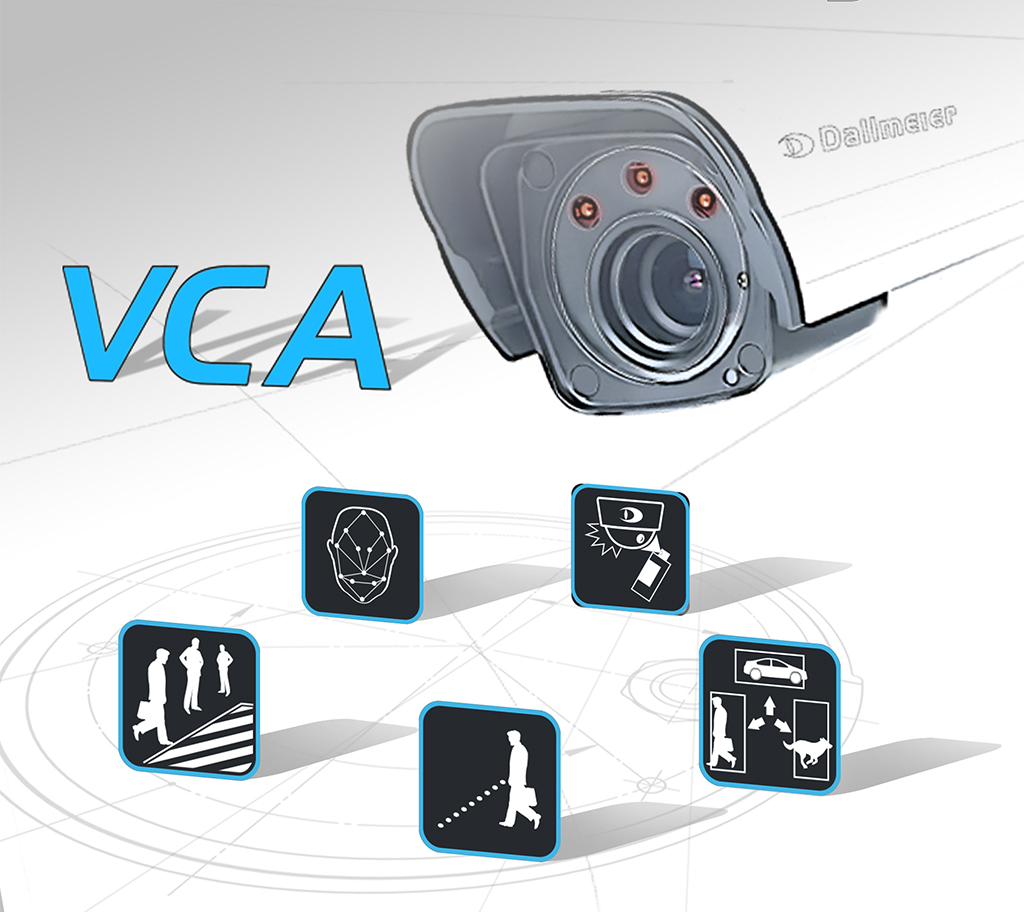
In the era of Artificial Intelligence, IP cameras are no longer just devices that generate images but have become intelligent solutions that are part of a video surveillance infrastructure.. Dallmeier follow these developments by integrating VCA technology (Video Content Analysis – video analysis) in its range of series cameras 5000 to enable intelligent search for incidents in video stream recordings.
Video Content Analysis technology enables automated analysis of observation situations that uses video data to detect and classify relevant objects and incidents, as well as offering a smart filter function to manage large volumes of recorded material.
Filtering of the observation situation carried out by the camera, with the help of pre-established classifications, allows real-time video analysis, so that incorrectly detected incidents can be minimized beforehand and are not even taken into account when storing them. For your part, relevant incidents can be stored on the server along with associated metadata.
This functionality prevents the user from having to waste time looking at large volumes of archived material, but you can find incidents of interest more selectively and efficiently with the help of stored metadata. Valuable time is saved and suspicious instances can be verified quickly and easily.
Unlike motion detection (simple detection of movement), that performs the analysis on the device only after the events have occurred, VCA technology performs the analysis in advance and in real time, and classifies the objects it detects.a Analysis results are continuously transmitted to the recording system, along with the corresponding metadata, as an incident report.
With VCA technology, Five different analysis classifications can be assigned depending on the field of application: intrusion detection, line crossing detection (line-crossing), object classification, face detection and tampering.
In addition to the basic data, like the date, time and location of incidents, Additional filters can be used so that a wide spectrum of information can be stored, such as the class of object or the duration of the incident. This can contribute to a search and evaluation, accurately and distinguish between classes of objects and filter them (such as vehicles or people).
¿Te gustó este artículo?
Subscribe to our NEWSLETTER and you won't miss anything.