


Video technology is more than just a security guarantee, especially in logistics
En este artículo, Josua Braun, Marketing Director of Dallmeier, explains the benefits that artificial intelligence and video technology bring to logistics companies.
The video surveillance is currently in the middle of a development leap. Modern solutions are, sin excepción, IP-based and, therefore, fully integrable into digital systems.
With the continued integration of artificial intelligence (IA), many application possibilities arise that until recently were not even imaginable. Logistics in particular can make processes more transparent with this video information technology and capitalize on potential that has been unused until now.
For logistics companies, it is important to get a good idea, as quickly as possible, of the operations inside the warehouse, during risk sessions, etc. The following principle applies here: the fewer camera images, the better overall view and traceability.
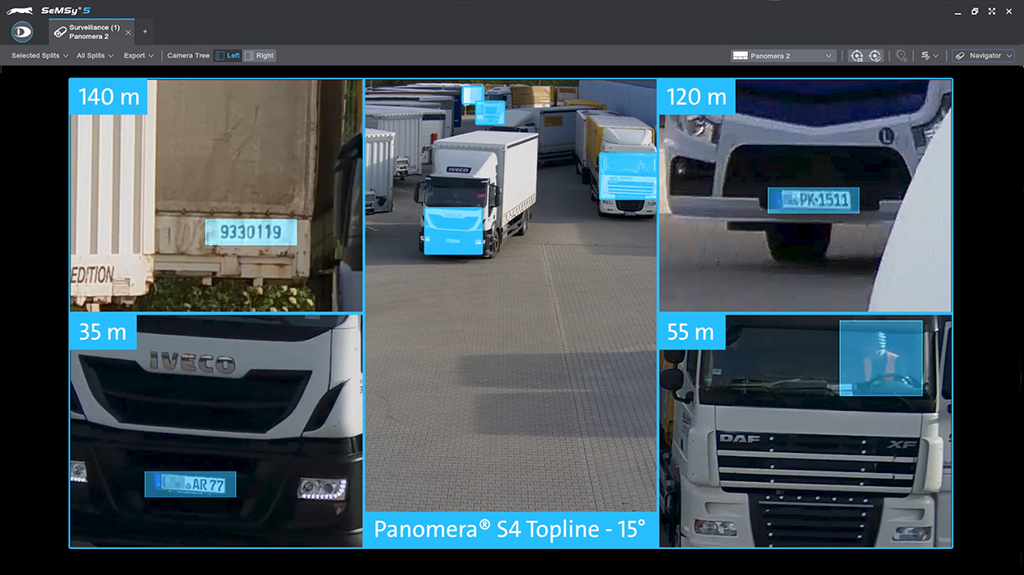
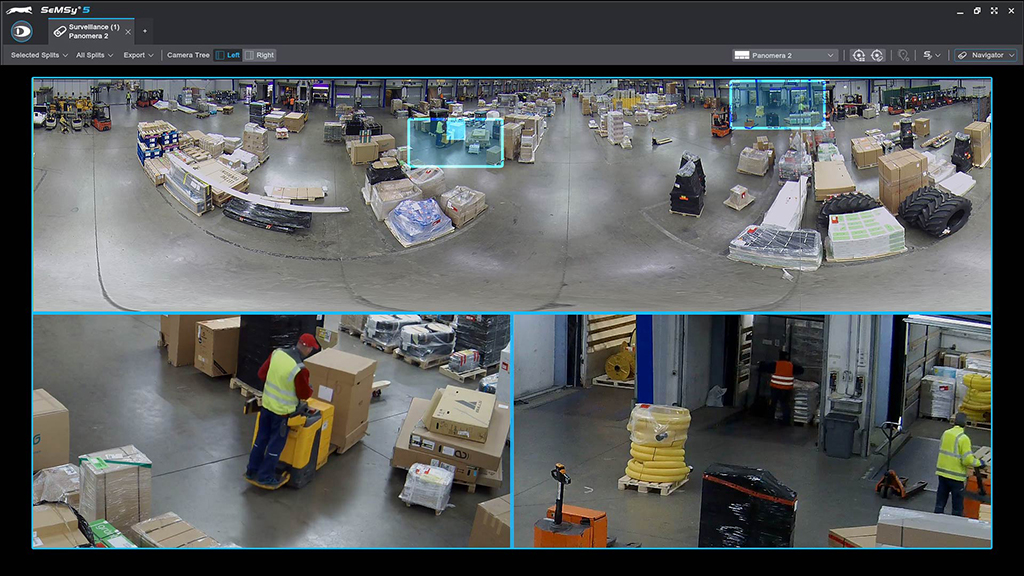
The so-called multifocal sensor technology, like the one used in camera systems Panometer, combines several sensors with different focal lengths into a single optical system. This way, users can see in a composite and complete image of a very large area any number of detail images with a mouse click.
This combination of overview and detail significantly improves context detection and tracking, and the number of cameras and infrastructure required (positions, cabling, network, etc.) is reduced substantially. Esto disminuye el coste total de propiedad y mejora a fin de cuentas la calidad general del servicio de logística.
Control de fletes en tiempo real
La colocación incorrecta de envíos es otro reto conocido en la logística, sobre todo en la de mercancía general. El enlace automático de imágenes de vídeo con números de envío permite investigar de manera muy rápida y automatizada y localizar rápidamente los envíos afectados.
Sistemas inteligentes y basados en vídeo efectúan mediante servidores horarios una sincronización fotograma a fotograma de los diferentes eventos de escaneo. Esto facilita una asociación rápida de las correspondientes secuencias de vídeo, thus significantly reducing the time required for shipment tracking.
Visual inspection according to DIN standard
In addition to safety, visual inspection and documentation of operations is an essential added value of outdoor camera systems. The keyword here is video support in yard management, claims management and evidence preservation in case of accidents.
Of particular importance for logistics companies is detailed process traceability and the admissibility of images in courts. DIN EN 62676-4 exactly defines what pixel density per meter (px/m) allows what recognizability.
For example, with a resolution density of at least 250 px/m, It can be assumed, that a judge will recognize a person's video image with a high probability for unequivocal identification.
Camera systems that allow covering as large an area as possible without falling below the required minimum resolution density, are clearly advantageous here. They allow capturing larger contexts without gaps, even in yard management, which becomes difficult with a growing number of surveillance cameras and monitors.
Automatic false alarm detection
Outdoors, the high number of false alarms in perimeter protection is often a problem. Modern video systems already work with AI-based object classification. So, the systems only transmit the relevant incidents as an alarm.
This would be the case, For example, in which a human intruder or a vehicle is detected with a defined probability, which helps surveillance personnel and increases security. Just like in video-supported yard management, technologies that can manage with few cameras - such as multifocal sensor technology- offer here the advantage of a low total cost of ownership with, at the same time, a better overall view.
Video analysis
The smart perimeter is just an example of the rapid development of video analysis. Here new solutions are emerging in a short time, from people counting, to the classification of objects of various types, up to the detection of moments of danger.
Regardless of the application, those responsible often underestimate what the fundamental requirement is for a good analysis: good data quality. In video analysis, this is equivalent to image quality.
For that reason, a good piece of advice for those responsible for logistics, when choosing their camera systems, is to pay attention to ensuring they can define a minimum constant image quality over the largest possible areas. In this way - besides, For example, ensuring admissibility in court -, they will also be well equipped for current and, in particular, future analysis tasks.
Josua Braun
Marketing Director of Dallmeier

¿Te gustó este artículo?
Subscribe to our NEWSLETTER and you won't miss anything.