


JVC Professional SuperLolux technology, to exam
The development of the new Super Lolux CMOS sensors incorporated into JVC Professional IP cameras has faced significant challenges, which the engineering department of this company analyzes in detail in this article.
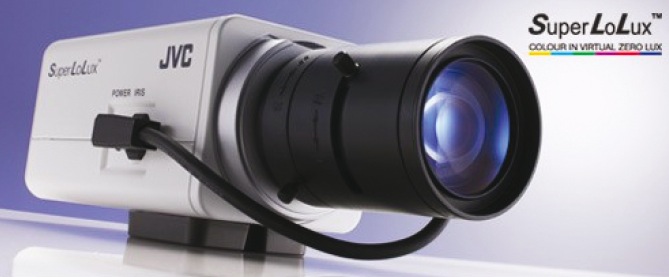
The video surveillance sector has undergone significant changes in recent years, as a consequence of the rapid advances in IP network CCTV cameras, whose performance, efficiency and features have been continuously improved. But, sin duda, one of the development lines of these devices has been to maximize their capacity and functional spectrum.
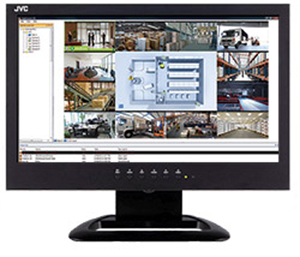
This last aspect has always been an important challenge, considering that it involves the evolution of classic cameras from CCD sensors and that, hasta hace sólo unos pocos años, los ingenieros perseguían el objetivo de diseñar una cámara IP con codificación H264 con resolución D1 o 720p. At the moment, las cámaras CCTV se han convertido en dispositivos compactos y muy eficientes, que combinan en un sistema la capacidad de “inteligencia” (video analysis) y un funcionamiento autónomo. Besides, estos dispositivos incorporan ya capacidad de gestión de vídeo (sistema VMS), mediante memorias con tarjetas SDHC, que asume la función de servidor del sistema.
Cuando un profesional intenta definir de forma general lo que debe tener una cámara CCTV, los elementos primordiales son buenas prestaciones, capacidad de capturar y reproducir imágenes de calidad, both day and night, y que los usuarios valoran un tipo de cámara que funcione de forma totalmente independiente a las “tareas de servidor”; una tendencia que es justo la que marca el mapa de ruta del concepto de cámara integrada todo-en-uno.
Problema: imágenes pobres en condiciones de poca luz
However, es importante reconsiderar los pros y los contras de dichos desarrollos tecnológicos con el fin de realizar las correspondientes correcciones y sentar las bases para nuevos avances. La cuestión clave para una marca como JVC Professional es: “¿Cuáles son las características que una cámara ideal debe tener?”
Al preguntar a los usuarios y analizar sus demandas sobre cámaras CCTV se observa una orientación clara por un dispositivo “universal”, capable of capturing sharp and bright images in any situation, with results in perfect harmony with the built-in VMS system; not forgetting that it works for day/night, in fog or in difficult environmental conditions (rain, snow). En resumen: a camera model that adapts to each situation.
Most current 1080p cameras are capable of providing detailed and bright images, but nighttime images are, often, of poor quality and, therefore, make it difficult for the VMS system to perform analysis. This is a result of the interdependence between the two most important device parameters: sensitivity and resolution, which affect each other.
With image sensors of the same size, un chip con una mayor cantidad de píxeles es capaz de ofrecer una resolución más alta. However, la sensibilidad a la luz es inferior, ya que cada píxel absorbe una menor cantidad de energía luminosa. Therefore, un chip con una cantidad menor de píxeles (más grandes) trabaja con una resolución menor, pero mejora la sensibilidad ya que cada píxel absorbe más luz. Suponiendo que una escena disponga de una iluminación suficiente, lo descrito anteriormente desempeña sólo un papel menor y, therefore, una escena mal iluminada planteará por el mismo motivo un gran problema.
Un buen enfoque sería llegar a un compromiso entre la resolución y la sensibilidad, sobre todo cuando se considera que la amplificación de una señal pobre, aunque con alta resolución, will cause an inevitable increase in noise. Since a 1080p resolution is already demanded by the market, the decision to improve lighting or the sensitivity parameter seems to be the trend to follow.
 Lighting improvement
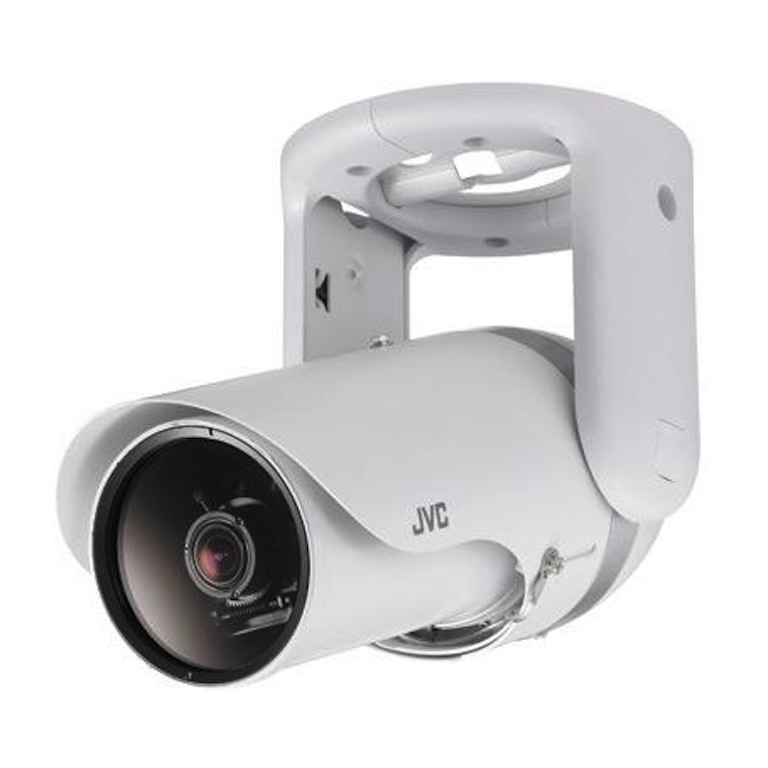
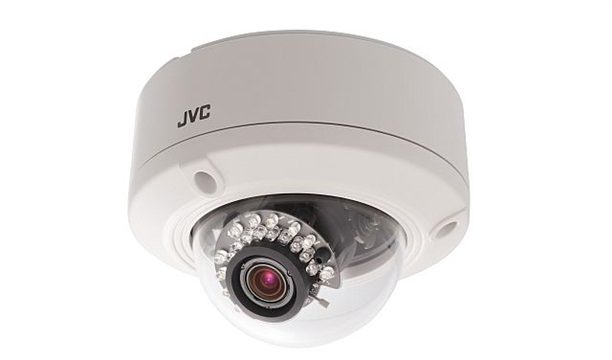
In order to 'bring some light into the darkness', the use of IR spotlights in installations or IR diodes directly integrated into the cameras has been a good solution. Although many experts consider that using quality IR spotlights is the only solution to capture night images, other users opt for 1080p cameras with built-in IR LEDs, which not only provide an easier installation but also a less expensive one.
However, there are also disadvantages, such as overexposure at short distances (For example, close-ups of people's faces); a relatively short range; side effects that appear in rainy situations; insect attacks, etc. Despite the so-called 'smart' IR diodes, capable of reducing these unwanted effects to some extent, it can be concluded that despite their relative improvements, both IR-based lighting solutions have disadvantages in cost and energy consumption.
 Improvement in sensitivity
Although infrared technology still has a long way to go, JVC Professional has developed a new concept that allows avoiding the problem of having to work with low lighting. Por las razones antes mencionadas, durante los los últimos años se han realizado importantes inversiones en el desarrollo de complejos sistemas de cámaras “válidas para todo”, y precisamente esto ha sido lo que ha motivado a los ingenieros de JVC a analizar de nuevo los parámetros fundamentales, que son cruciales para fabricar una buena cámara.
Se trata de hacer hincapié en la mejora de la sensibilidad a la luz. De esta manera se vuelve a poner el punto de mira en la cámara en su conjunto, concentrándose en el elemento de “sensibilidad a la luz”. El núcleo de la cuestión radica en la tecnología de sensores de imagen, that is to say, in the development of an extremely light-sensitive chip that must also deliver excellent results, even in foggy conditions.
Having the necessary resources, JVC engineers have focused their efforts on designing a camera with integrated IR illumination, but that only requires its support in 'real' situations of 0,0 lux, in which the use of flash would be necessary. The corresponding laboratory analyses and tests with multiple cameras led to the conclusion that there is still no product, and not even any known development, that can meet these requirements.
 The Super LoLux CMOS sensor
Since conventional video sensors have not been able to produce the results that were required, the design of a new sensor was an option supported by several specialists in this industry. With the socket structure of the new CMOS Superlolux sensors, JVC has managed to combine the best of both worlds: the advantages of the grid base of a classic CCD sensor with the socket structure of an advanced CMOS sensor.
The concept of socket element arrangement brings with it a significant increase in the usable pixel area (positively affecting sensitivity), mientras que ya no es necesario reducir la cantidad de píxeles debido a la disposición típica de rejilla de los sensores clásicos. El resultado de todo ello es el sensor CMOS Super LoLux. Otra ventaja del nuevo sensor es su eje pivotante horizontal y vertical, que permite la optimización del realce óptico (foco posterior/distancia al flanco) y que no implica ninguna pérdida de realce causada por desajustes mecánicos.
However, el sensor es sólo un componente de una cámara de 1080p de alto rendimiento y JVC ha realizado importantes inversiones en el diseño de un nuevo codificador adaptado a las exigencias de los sensores CMOS Super LoLux; en el desarrollo de nuevas tecnologías de reducción de ruido, and in the implementation of CLVI technology (Clear Logic Video Intelligence), an innovative advancement that enhances light utilization and detail enhancement in foggy and misty conditions up to 40%, what in many cases could make the difference between a useless work system and one with 'perfect vision' .
The results obtained are more than convincing: the Super LoLux CMOS sensors, combined with the technologies described above, make it possible for JVC's Super LoLux HD range of IP cameras to reproduce usable color and B/W images obtained at only 0,3 lux with a resolution of 1080p.
¿Te gustó este artículo?
Subscribe to our NEWSLETTER and you won't miss anything.