


Madrid prepares an innovative video surveillance system for transport infrastructure
La Comunidad de Madrid ha puesto en marcha de manera experimental, en el Intercambiador de Moncloa, un proyecto para mejorar la seguridad en las grandes infraestructuras de transporte que permite identificar en tiempo real cualquier situación de riesgo para los usuarios.
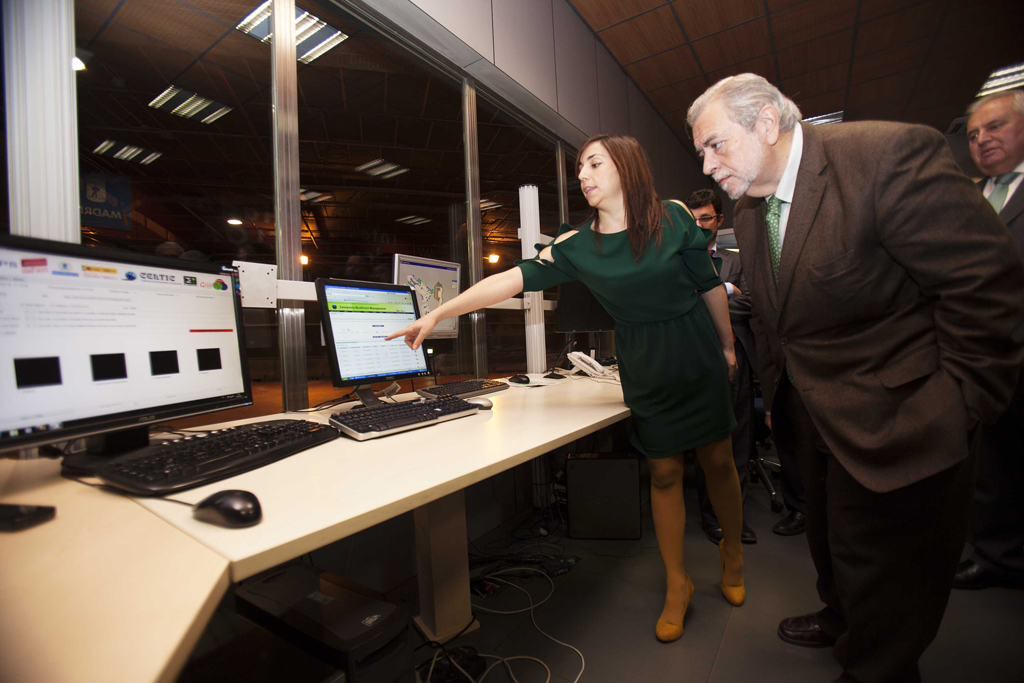
El Intercambiador de Moncloa de Madrid cuenta con un nuevo sistema de seguridad experimental, pensado exclusivamente para dar cobertura a grandes infraestructuras del transporte, que permitirá identificar de forma automática posibles situaciones de riesgo para los usuarios, localizando y avisando en tiempo real al personal de seguridad. Se trata de una prueba piloto basado en la visión artificial que permite identificar a cada persona, record their trajectory and classify it according to the objects they carry.
The Minister of Transport and Infrastructure of the Community of Madrid, Antonio Beteta, attended a pilot test of this innovative video analytics system based on 'computer vision', with which it is possible to instantly analyze any area of a transport infrastructure under video surveillance that, due to its configuration, requires greater attention in supervision and security control tasks.
Beteta explained that the pilot test being carried out at the Moncloa Interchange consists of the development of a video analytics system that allows for the individual identification of each person appearing on screen, record their trajectory, as well as carry out a classification of it based on whether or not it carries certain types of objects.
Image analysis triggers an alarm if it detects a potential risk situation such as a crowd gathering, robbery risks or abandoned suspicious items and, through the incident manager, alerts the security personnel responsible for the interchange. The Community reminds that all these tests are being conducted always respecting the privacy of the people captured by the cameras, and that these are simulated sequences to test the effectiveness of a system that allows users' mobility to be safer every day.
Beteta explicó que esta iniciativa de I+D forma parte del proyecto de innovación europeo HNPS (Heterogeneous Network for European Public Safety), developed by 16 compañías de países como Francia, Luxembourg, Germany, Holanda y España, donde está siendo fundamental la colaboración público-privada de entidades como la Universidad Politécnica de Madrid, Telefónica I+D, Gowex y SICE (coordinador técnico del piloto HNPS). El sistema de vídeo analítico ha sido desarrollado por el Grupo de Aplicación de Telecomunicaciones Visuales de la E.T.S.I. de Telecomunicación de la UPM).
¿Te gustó este artículo?
Subscribe to our NEWSLETTER and you won't miss anything.