


The EC proposes a certification system to guarantee security at EU airports
Esta propuesta permitirá, through the simplification and harmonization of airport control equipment certification standards, ensure the application of security control standards at all airports in the European Union. These security control devices are used for the inspection of people (passengers and staff), hand and checked luggage, supplies, air cargo and mail.

The European Commission it has proposed a single certification procedure in the EU for airport security control equipment that will improve the competitiveness of the security industry in the area.
This certification will allow security equipment approved in one Member State to be marketed in others. The creation of a mutual recognition system for security equipment will help to overcome the problems arising from market fragmentation, strengthen the competitiveness of the security industry, boost employment in the sector and, en última instancia, improve aviation security throughout Europe.
Technology allows us to prevent threats and strengthen the security of European citizens and the resilience of European society as a whole. Esta propuesta permitirá, through the simplification and harmonization of airport control equipment certification standards, ensure the application of our strict security control standards at all EU airports. También contribuirá a potenciar la competitividad de la industria de la seguridad europea y a aumentar su capacidad para ofrecer soluciones que refuercen la seguridad de los ciudadanos de la UE”, explica Dimitris Avramopoulos, comisario europeo de Migración, Asuntos de Interior y Ciudadanía.
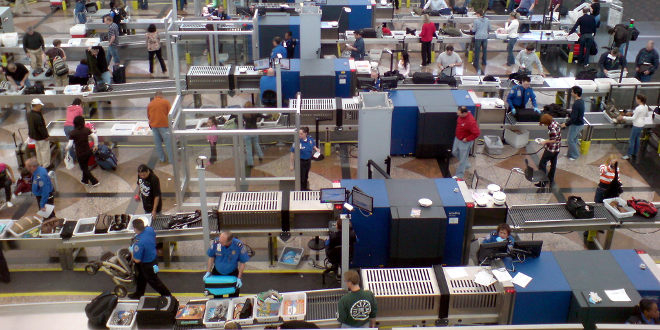
Los equipos de seguridad para el control de personas, equipajes de mano y mercancías en el sector de la aviación constituyen un mercado con un volumen de negocios anual de 14.000 millones de euros a escala mundial, de los que 4.200 millones corresponden a la UE. However, en la actualidad el mercado interior de la UE de los equipos de control está fragmentado debido a los procedimientos nacionales de certificación, that hinder market efficiency and the free movement of goods.
EU legislation, which currently sets the technical specifications and performance requirements for aviation security control equipment at airports in the area, does not establish a legally binding EU-wide conformity assessment system to ensure that the required standards are met at all its airports.
The Commission's proposal establishes a single certification system based on a common analysis methodology and the issuance of conformity certificates by manufacturers that would be valid in all its Member States, in accordance with the principle of mutual recognition.

Airport security screening equipment
Airport security screening equipment is used for the inspection of individuals (passengers and airport staff), hand and checked luggage, supplies, air cargo and mail.
EU legislation on aviation security controls is based on the standards developed by the Commission and is adapted to the evolution of threat scenarios and risk assessments.
Member States, in cooperation with the Commission, have partially addressed the issue of market fragmentation through the development of common testing methods within the framework defined by the European Civil Aviation Conference (CEAC). In 2008, The CEAC implemented a common evaluation process (CEP) for the testing of security control equipment used in the aviation sector. Since then, the CEP has been reviewed and improved regarding its effectiveness, but it still lacks the legally binding framework that would allow full use of its potential.
He 28 April 2015, The European Commission adopted the European Security Agenda, which sets out the main measures to ensure an effective EU response to terrorism and threats to the security of the European Union over the period 2015-2020.
¿Te gustó este artículo?
Subscribe to our NEWSLETTER and you won't miss anything.