


The all-seeing eye is, now too, intelligent
Through traffic cameras, a project, based artificial vision techniques with geolocation developed by Universidad Carlos III de Madrid (UC3M) and the companies Abertis and Solusoft, aims to detect violations, recognize the danger, position it or indicate which agent can go to the scene of an incident
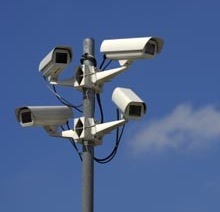 Researchers from the Carlos III University of Madrid (UC3M) and the companies Abertis y Solusoft have developed an intelligent system that analyzes images from video cameras in real time, detects abnormal situations and alerts the closest security agents in emergency cases, such as the presence of a vehicle traveling on a road in the opposite direction.
This platform that combines artificial vision techniques with geolocation and ICT is part of WHERE, an R&D&i project that studies and validates mobility technologies, video localization and processing to be able to offer new services to citizens.
Specifically, This system finds applications in the field of civil and road safety, as the researchers explain. “Through traffic cameras you can automatically detect the presence of a driver traveling in a prohibited direction., recognize the danger, position it, indicate which security agent could address this situation more quickly and alert nearby drivers”, indicates Professor Antonio Berlanga, of the Applied Artificial Intelligence Group (GIAA) from UC3M. Inside emergency management, This system can speed up decisions and reaction and action times.
The main functionality of this platform is that it allows you to know what is happening and where exactly. And it does not require building an expensive and complex infrastructure, because cities usually already have cameras and other types of sensors that can be integrated into the system, researchers comment. "Besides, we include the citizen in a concept of 360 degrees, because the user is no longer a mere recipient of information, but you can also generate it through your smartphones”, says the R&D&I Director of Solusoft, Sergio Mayor.
For example, With the implementation of this platform, a person who becomes aware of a dangerous situation caused by a specific object (a sewer without a grate, a cornice that can be detached,…) could photograph that object and locate it thanks to the GPS of the mobile phone and send the photo to the corresponding maintenance services so that they could intervene as soon as possible.
The team has developed a demonstrator on different scenarios in the Abertis Smart Zone, which the company has in its facilities in Barcelona. thanks to them, The technical feasibility of this 'intelligent' system has been verified, equipped with the ability to understand what is happening. Until now, The display systems depended on an operator who is constantly watching what the cameras transmit in order to detect security incidents.. Instead, This platform provides the sensors (the cameras) ability to process what they see and report what, when and where an incident occurred. “Given the amount of images that have to be viewed in control centers, “It is good to have a tool that brings to the foreground the images of those points where the intelligent system has already perceived that something may be happening.”, explains Professor Berlanga.
Artificial intelligence
The GIAA is made up of an interdisciplinary team of researchers from the UC3M. It focuses its activity on solving engineering problems by incorporating the most innovative artificial intelligence techniques.: machine learning, evolutionary computing, data analysis, multi-objective optimization, fuzzy systems and intelligent agents. The group has a long history of work providing advice to companies and developing tailored solutions for prediction, optimization, data fusion and signal and image processing.
The project WHERE, that obtained financing in the Strategic Action of Telecommunications and Information Society of the Avanza Plan 2 from the Ministry of Industry, Tourism and Commerce, It has been developed by a consortium coordinated by Abertis Telecom with the participation of the University's GIAA and Solusoft, a company in the Leganés Technological Science Park just one hundred meters from the UC3M Science Park, the meeting forum for innovation with which the University participates within a productive business area to facilitate the collaboration of UC3M researchers with companies. The consortium's experience has been very positive, according to its members, since it has led the three entities to design, from the needs detected, a common service platform with which both companies and public administrations will be able to offer new services to citizens to improve road and civil safety.
¿Te gustó este artículo?
Subscribe to our NEWSLETTER and you won't miss anything.